To provide you with a more personalized experience, this website may place cookies on your computer. By accepting cookies you agree to this use of your data under Quantician’s Privacy Policy.
The 2025 MIPS Hardship Exception Application

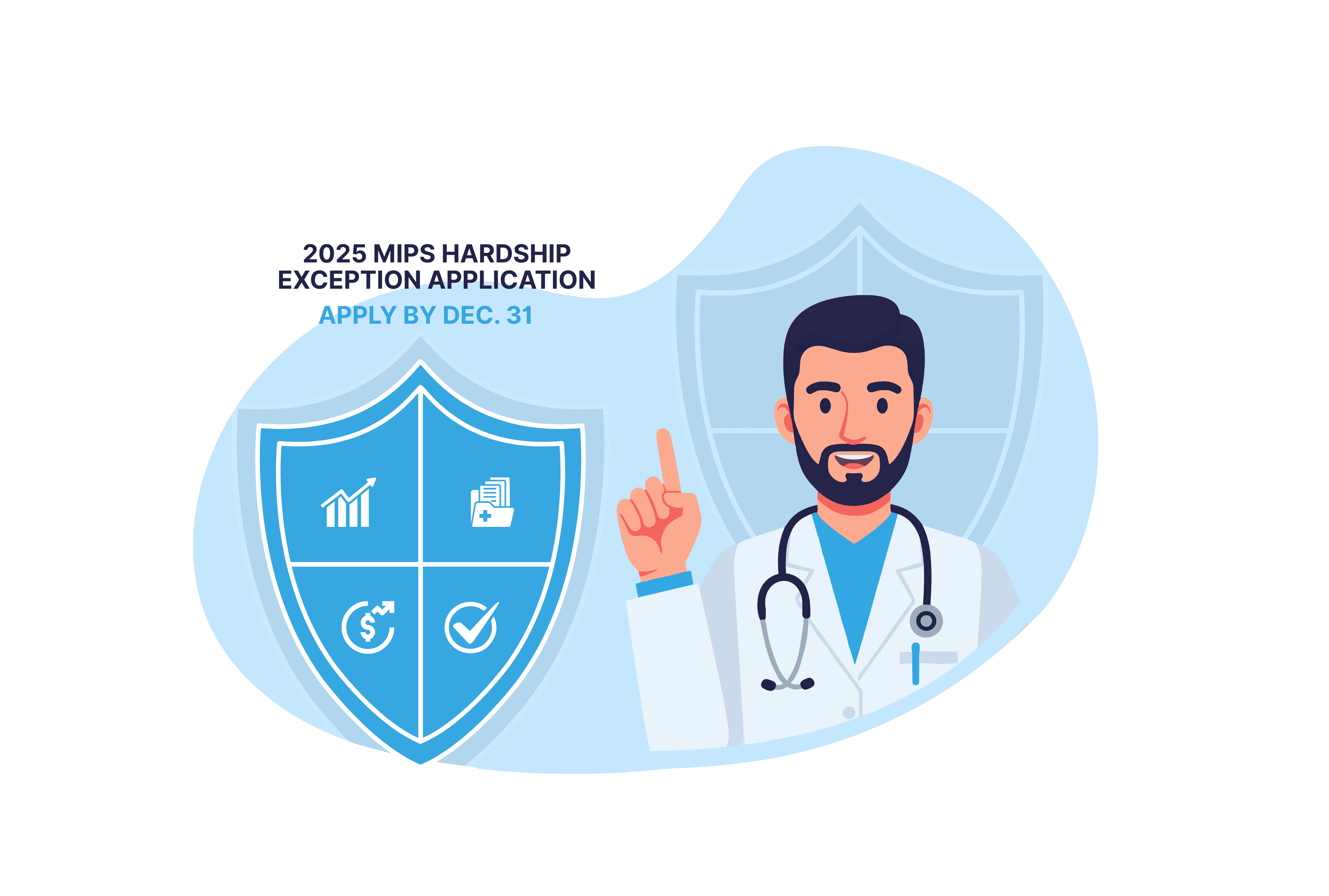
When uncontrollable events disrupt care delivery, CMS allows clinicians and organizations to request relief from MIPS reporting through two key pathways: the Extreme and Uncontrollable Circumstances (EUC) Exception and the Promoting Interoperability (PI) Hardship Exception.
Both are designed to protect participants from unfair penalties when performance data can’t be collected or submitted as intended.
Two Paths to Relief
- EUC Exception Application: Available to individual clinicians, groups, virtual groups, and APM Entities. It allows reweighting (to 0%) of one or more performance categories (Quality, Cost, Improvement Activities, or Promoting Interoperability) when operations are severely disrupted by rare events like natural disasters, cyberattacks, or system outages.
- PI Hardship Exception Application: Focused only on the Promoting Interoperability category. It’s intended for participants who cannot meet EHR-based requirements due to reasons such as vendor decertification, insufficient internet connectivity, or lack of control over certified technology.
Key Deadlines Both applications are open now and must be submitted by December 31, 2025, 8 p.m. ET. The 2025 performance period runs from January 1 – December 31, 2025, and results will impact 2027 payment adjustments.
How It Works
- Determine Eligibility: Identify whether your issue is broad (EUC) or PI-specific (Hardship).
- Apply Through the QPP Portal: Log in at qpp.cms.gov and navigate to “Exception Applications.”
- Describe the Event: Explain how the disruption prevented normal reporting. APM Entities must request reweighting for all performance categories.
- Await CMS Review: If approved, affected categories are reweighted to 0%.
- Do Not Submit Data for approved categories: doing so overrides the exception and triggers normal scoring.
*Critical Note: You may apply to both a PI-Specific Hardship and an EUC exception at the same time through the QPP portal if the event meets both 2025 Promoting Interoperability Hardship and EUC Exception criterias.
New Updates in 2025 CMS expanded EUC eligibility to include Cost and administrative claims-based measures, recognizing that disasters can affect more than EHR or quality data.
Additionally, automatic reweighting applies to clinicians in disaster-designated regions. For example, those affected by the 2025 California wildfires will automatically receive EUC relief without filing an application, unless they choose to submit data in two or more categories.
Best Approach for Practices and Registries
- Document Everything: Keep records of outages, closure notices, and vendor communications for at least six years.
- Apply Early: Don’t wait until December; CMS reviews applications on a rolling basis.
- Coordinate Internally: Notify teams to avoid submitting data for reweighted categories.
- Leverage Registry Insight: Use a registry’s reporting tools to track disruptions and confirm category status.
The 2025 Hardship and EUC Exceptions give clinicians and organizations flexibility when extraordinary events threaten reporting integrity. By applying early, documenting thoroughly, and leveraging registry expertise, practices can preserve compliance and avoid unnecessary penalties.

ACO Performance Strategies for Quality Success
CY 2026 Medicare PFS Final Rule: A Strategic Overview for Registries, ACOs & Reporting Partners